Bed bug remediation requires methodical, systematic interruption of insect reproduction rather than aggressive airborne pesticide spraying. In the humid climate of coastal Northeast Florida, adult *Cimex lectularius*…
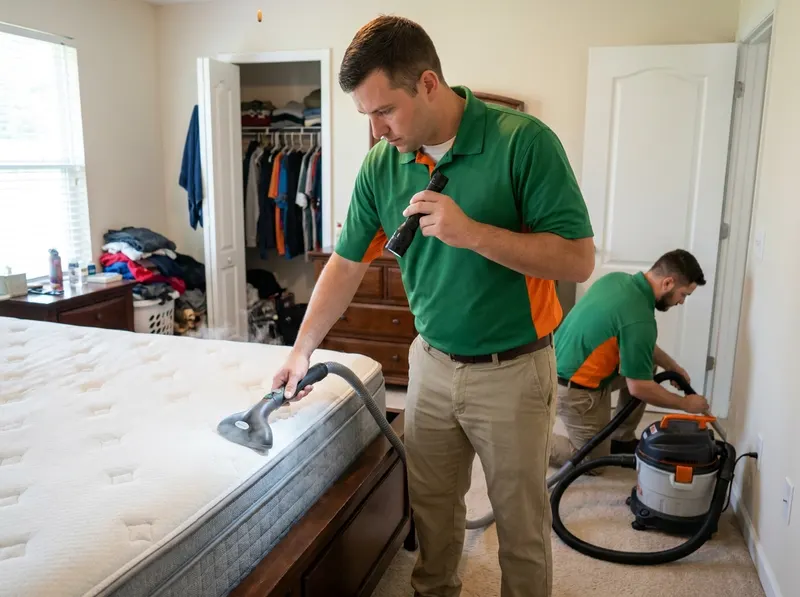
Bed bug remediation requires methodical, systematic interruption of insect reproduction rather than aggressive airborne pesticide spraying. In the humid climate of coastal Northeast Florida, adult *Cimex lectularius* reproduce rapidly, with females laying between 1 and 7 eggs daily after blood meals. Effective control hinges on heat tolerance thresholds established by the U.S. Environmental Protection Agency, which dictates sustaining core ambient room temperatures at 122°F (50°C) to denature vital insect proteins and eliminate eggs. High-density historic wood construction found throughout Riverside, Avondale, and Springfield presents deep baseboard gaps and tongue-and-groove pine floors where bed bugs harbor away from topical surface contact. Remediating these environments requires monitored structural convective airflow to penetrate wall plates and subflooring without damaging delicate personal belongings.
Selecting between specialized heat convection and targeted botanical desiccant treatments depends directly on room geometry, clutter levels, and occupancy parameters. For modern multi-story residences in Southside or single-story ranch layouts in Arlington and Oceanway, whole-structure thermal treatments offer single-day clearance by heating ambient indoor air up to 135°F, monitored via wireless thermal sensors across internal harborage zones. The trade-off centers on preparation intensity: thermal cycles require temporary relocation of aerosol canisters, select plastics, and temperature-sensitive electronics. When structural layouts or medical needs rule out elevated heat, precision applications of amorphous silica dust and University of Florida IFAS Extension vetted insect growth regulators establish an exterior and perimeter barrier within interior wall voids and electrical outlets, dehydrating nocturnal nymphs upon emergence.
Waterfront humidity along the St. Johns River corridors in Mandarin and Ortega causes microclimates that slow traditional off-the-shelf aerosol dry times, frequently driving insects deeper into drywall recesses instead of eliminating them. Proper protocol adheres to standards maintained by the National Pest Management Association, pairing non-toxic, food-grade mechanical barriers with vacuum extraction using certified HEPA systems verified under Occupational Safety and Health Administration air quality guidelines. Integrated pest management protocols published by the Centers for Disease Control and Prevention reinforce that surface spot treatments alone cannot penetrate deep electrical conduits. TerraGuard Insect Services applies barrier seals across pipe penetrations, baseboards, and window trim, creating non-chemical deterrents that protect coastal Jacksonville properties from recurrent infestations without introducing volatile organic compounds into enclosed sleeping quarters.
Every job gets a firm, written price after a free on-site visit.
Tell us about your bed bug remediation job in Jacksonville and we'll send a clear, written quote, usually the same day.
 TerraGuard Insect Services